A cozy truth: Who doesn’t love warm cider on a chilly day or a fire on a blustery night? Humans have always sought warmth and shelter when temperatures drop. For centuries, we bundled up to survive, but today, heated apparel makes staying warm easier. This innovation not only enhances comfort but also supports performance, which outdoor enthusiasts and winter athletes truly appreciate.
Before discussing the benefits, let’s quickly address a common myth:
Does Being Cold Make You Sick?
Feeling cold can lead to shivering, stiffness, and goosebumps, but exposure to cold air itself does not directly cause viral illnesses. Instead, cold weather often drives people indoors, where closer contact with others can increase the risk of infection. It's still important to follow standard cold-weather safety guidelines: dress in layers, stay dry, and take breaks to warm up if you are outside for extended periods.
10 Health & Comfort Benefits of Heated Apparel
1) Lower Cold-Stress Risk (with Better Layering)
Wearing a heated mid-layer under a windproof or waterproof shell aligns with the recommended base → mid → shell layering model for cold environments. This setup helps keep you comfortable and reduces risks such as hypothermia and frostbite when you’re outside for work or leisure. Plan regular warm-up breaks, keep dry layers handy, and watch for early signs of cold stress. (OSHA)
2) Less Bulk, More Mobility
Thin heating elements provide controlled warmth without the added bulk of heavy layers that restrict movement. A heated mid-layer allows for free movement during commutes, on ladders, trails, or skis—exactly what layering guidance aims to achieve. (CDC)
3) Warmer Extremities = Better Dexterity
Cold hands and feet can diminish grip and fine motor control. Safety guidelines emphasize the importance of protecting the ears, face, hands, and feet; heated gloves and socks can help keep these areas functional and comfortable in wet or windy weather.
4) Help for Stiff Joints & Tight Muscles
Gentle heat enhances blood flow and can relax tight muscles and stiff joints, which many people experience on cold mornings. Health organizations note that heat is beneficial for lingering aches and mobility, while ice is preferred immediately after a sprain or strain. (Arthritis Foundation)
5) Safer, More Effective Warm-Ups in the Cold
Raising muscle temperature supports range of motion and may reduce the risk of injury when you begin moving quickly. Use heated layers to stay warm while doing a short dynamic warm-up, but don’t rely on heat as a replacement for warming up. (PMC)
6) Better Focus & Comfort Outdoors
When you’re shivering, it’s challenging to concentrate on tasks. Heated apparel stabilizes your torso temperature so you can focus on footing, tools, routes, or traffic—this is especially helpful for outdoor work or sports in fluctuating weather conditions. (Pair with smart breaks and hydration.)
7) Smarter Temperature Control on the Move
Unlike static layers, heated apparel allows you to adjust the heat up or down as conditions change—whether climbing a hill, entering a windy street, or moving into the shade—helping you avoid overheating or becoming too cold. This control also aids in managing sweat and staying dry, which reduces heat loss.
8) Wind-Chill Defense (When Used Under a Shell)
Wind accelerates heat loss from exposed skin and thin fabrics. A heated mid-layer combined with a windproof shell counters the wind’s cooling effect and can help extend battery life by minimizing the added heat needed. (National Weather Service)
9) Extra Support for Older Adults & Cold-Sensitive Groups
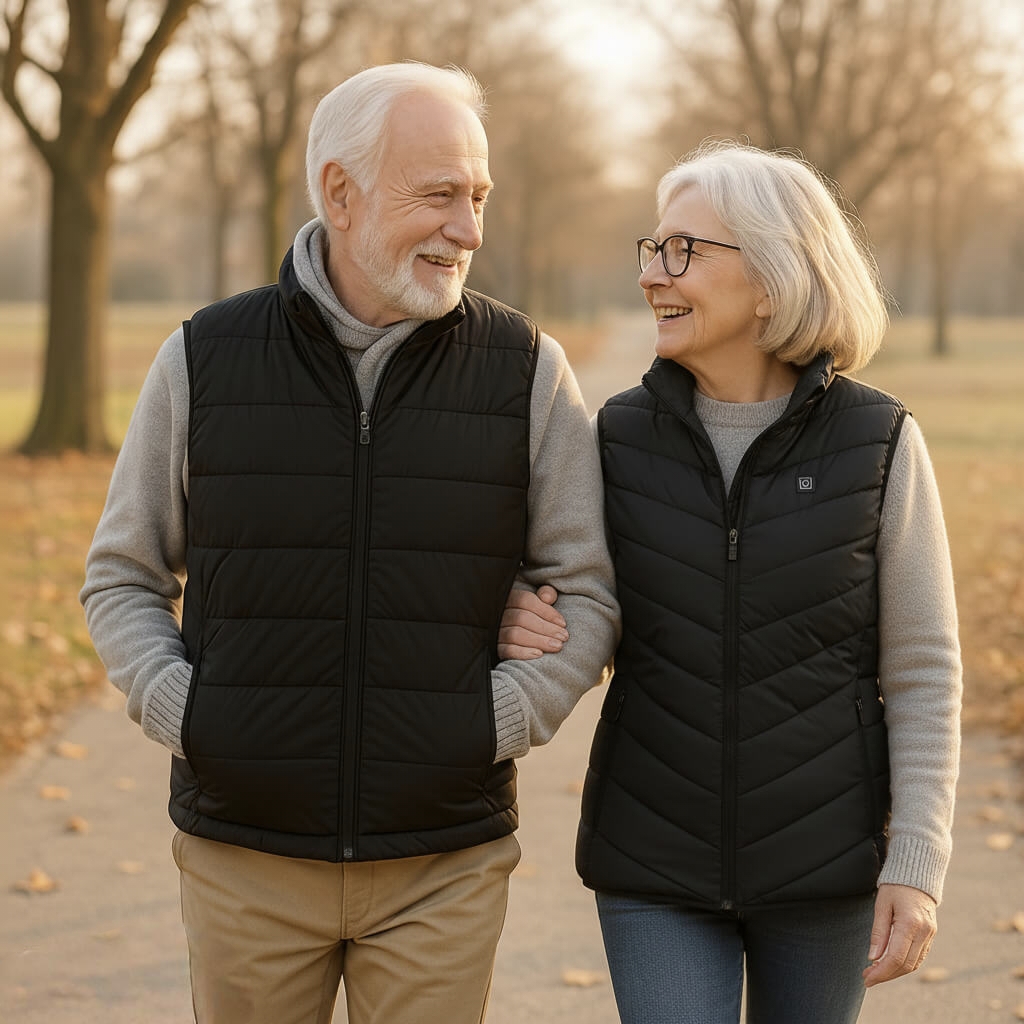
Older adults and individuals who spend long periods outside face higher risks related to cold weather. Recommended warm layers and protective shells can be enhanced with heated apparel that offers adjustable warmth without bulk, making day-to-day activities more comfortable. (CDC)
10) Encourages More Fresh Air Time (with Precautions)
Comfortable warmth allows you to stay outside longer—whether for errands, exercise, or sunlight—while avoiding crowded indoor spaces. Just remember to layer properly, stay dry, and plan warm-ups in a sheltered area when necessary.(Cleveland Clinic)
Smart Usage Tips (Quick Guide)
-
Layer placement: Base (wicking) → heated mid layer → wind/rain shell. (OSHA)
-
Heat strategy: Start on medium to warm up; drop to low to extend battery life.
-
Stay dry: Swap damp base layers; moisture speeds heat loss.
-
Mind wind chill: A shell saves heat (and battery) on blustery days. (National Weather Service)
-
Heat vs. ice: Use ice first for fresh swelling; use heat for stiffness and lingering aches.
Friendly reminder: Heated apparel supports comfort and function; it isn’t a medical device. If you have a health condition, ask your clinician how to use heat safely.
FAQs
Is heated apparel safe?
Reputable products use low-voltage systems and protection circuits. Still follow cold-stress guidance: dress in layers, schedule warm-up breaks, and keep clothing dry. Learn more: Are heated vests safe?
Does wind chill really matter?
Yes. Wind makes it feel much colder by increasing heat loss; frostbite can occur faster in high winds. A windproof shell over your heated layer helps.
Should I use heat or ice for pain?
For a brand-new injury, ice first. For stiffness or lingering soreness, gentle heat can help. Avoid high heat on numb skin.
Ready to build your kit?
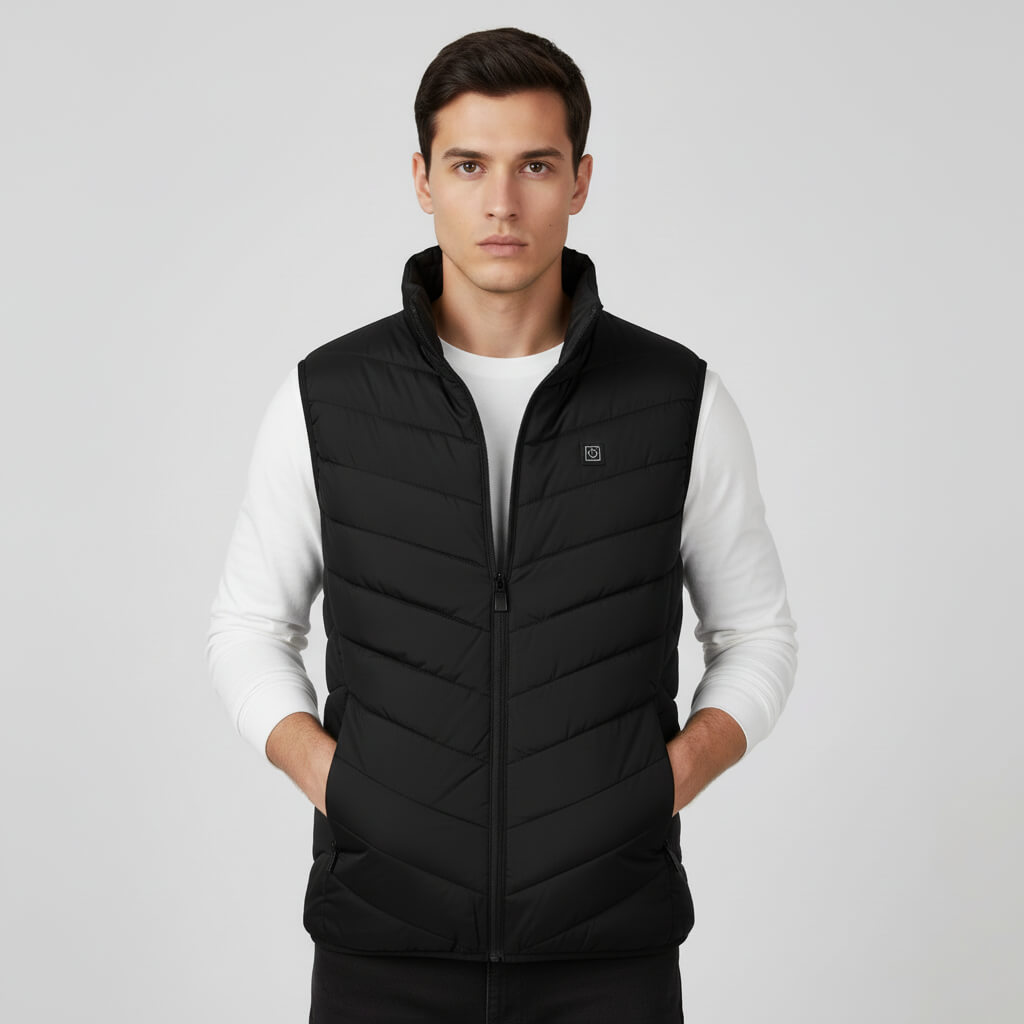
Choose a heated vest for core warmth; add gloves/socks for dexterity. Pair with a breathable base and a windproof shell. Warm, mobile, and winter-ready—wherever the season takes you.
Ready for smarter warmth? Explore Cozy Core heated apparel now.”